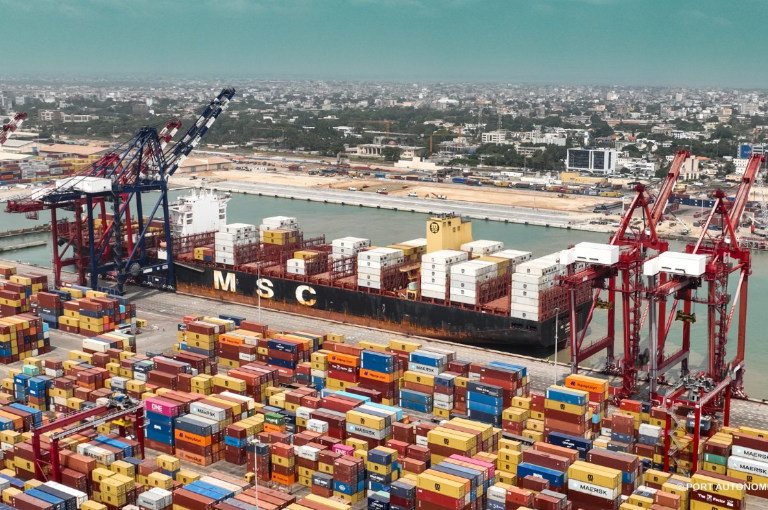
Behind Cotonou port’s transit surge: how Burkina Faso reshaped West African trade flows
When the political crisis between Benin and Niger disrupted traditional trade routes in 2023, few expected the port of Cotonou to not only survive but thrive. Instead of collapsing under the strain, the Beninese maritime hub pivoted—redirecting its transit flows toward new hinterland markets, with Burkina Faso emerging as the standout beneficiary. By 2025, nearly one million tonnes of goods, primarily hydrocarbons, passed through Cotonou en route to landlocked Burkina Faso, and early 2026 figures suggest this momentum is accelerating. With 7.79 million tonnes handled in the first half of 2026—a 16.6% increase over the same period last year—the port’s transformation underscores a deeper shift in West African trade dynamics.
From crisis to opportunity: the unplanned rise of a new corridor
The rupture in Benin-Niger relations didn’t just disrupt trade—it exposed the fragility of single-route dependencies. For decades, the Cotonou-Niamey corridor had been the backbone of transit traffic, leveraging proximity and established logistics networks. But the 2023 border closure and diplomatic tensions severed this lifeline, forcing traders and port authorities to seek alternatives. Burkina Faso, already a strategic player in regional logistics, became the unexpected beneficiary of this disruption.
Unlike Niger, which had dominated Cotonou’s transit volumes for years, Burkina Faso had long maintained a diversified approach to maritime access, relying on ports in Ivory Coast, Togo, and Ghana in addition to Benin. When the Niger corridor faltered, Ouagadougou’s logistics operators quickly recalibrated, redirecting shipments through Cotonou. The result? A sudden surge in transit volumes that caught even seasoned analysts off guard.
The hydrocarbon factor: why fuel shipments fueled the shift
What makes Burkina Faso’s transit surge particularly significant is the composition of the cargo. Nearly 60% of the goods moving through Cotonou to Ouagadougou in 2025 consisted of hydrocarbons—fuel products critical to Burkina Faso’s energy security. Landlocked and heavily reliant on imported petroleum, the country has few alternatives to Gulf of Guinea ports. Cotonou’s proximity and modernized storage infrastructure made it the logical choice, especially as regional tensions raised the cost and risk of other routes.
This specialization didn’t happen by accident. Port operators in Cotonou had long recognized the potential of the Burkina Faso market, but the timing of the Niger crisis accelerated the shift. With demand for fuel remaining constant despite political upheaval, the port’s transit volumes stabilized—and grew—even as other corridors struggled. The numbers tell the story: in 2025, transit accounted for 39.2% of Cotonou’s total traffic, with Burkina Faso alone representing 16% of that volume.
2026’S early numbers: a port in transition
The first half of 2026 has reinforced the narrative of Cotonou’s transformation. While overall imports remained relatively flat—rising just 0.6% from 2025—the real story lies in exports and transshipment. Exports surged by 33.3%, while transshipment volumes exploded by 152.1%, jumping from 204,928 tonnes to 516,558 tonnes. Though these figures don’t directly track Burkina Faso-bound traffic, they signal a broader trend: Cotonou is evolving from a local port into a regional redistribution hub.
For Burkina Faso, this shift is more than a logistical convenience—it’s a strategic imperative. With political and security instability disrupting multiple corridors across the Sahel, Ouagadougou cannot afford to rely on a single route. Cotonou’s modernized infrastructure, including digitized truck movement systems, offers a compelling alternative. The port’s ability to reduce processing times and improve cargo fluidity has made it an increasingly attractive option for Burkinabè traders.
The Niger paradox: why the old corridor isn’t dead yet
Despite the rise of Burkina Faso, the Niger corridor hasn’t vanished entirely. In August 2026, a million-barrel shipment of Nigerian crude oil was exported from Cotonou’s Sèmè-Kpodji terminal, proving that some trade flows remain resilient. The relationship between Benin and Niger is a study in contradictions: diplomatic tensions disrupt overland trade, yet critical infrastructure—pipelines, storage facilities, and port terminals—keeps the two economies linked.
For Cotonou, the lesson is clear: diversification is no longer optional. The port must balance its growing ties with Burkina Faso against the persistent, if diminished, role of Niger. The goal? To avoid becoming overly dependent on any single hinterland market—a risk that nearly derailed the port during the 2023 crisis.
What’s next for Cotonou and Burkina Faso?
The big question now is whether the Burkina Faso corridor will solidify into a permanent feature of West African trade. Early 2026 data suggests the trend is holding, but full-year figures won’t be available until late 2026. If the current trajectory continues, the Cotonou-Ouagadougou axis could emerge as a new structural corridor, reshaping regional logistics for years to come.
For Cotonou, this would mean a fundamental rebranding—from a Niger-focused port to a multi-market hub. For Burkina Faso, it would mean greater energy security and reduced logistical costs. And for the broader Sahel, it could signal the beginning of a more resilient, diversified trade ecosystem. One thing is certain: the days of Cotonou’s transit fortunes hinging solely on Niger are over.
Key takeaways from Cotonou’s transit transformation
- The Niger corridor’s decline created an opening for Burkina Faso, which quickly became Cotonou’s second-largest transit market after the crisis.
- Hydrocarbons drove the surge, accounting for nearly 60% of Burkina Faso-bound cargo, highlighting the country’s critical fuel import needs.
- 2026’s early numbers show resilience, with exports and transshipment volumes growing at double-digit rates, signaling Cotonou’s evolving role.
- Diversification is now a necessity—for both Cotonou and its hinterland partners—to mitigate future corridor disruptions.
- The Niger corridor isn’t gone, but its dominance is fading as new trade routes gain traction.
The road ahead: can this shift last?
The durability of the Cotonou-Burkina Faso transit boom hinges on three factors: political stability in the Sahel, continued investment in port and road infrastructure, and Burkina Faso’s ability to maintain its logistical advantage over rivals like Lomé or Abidjan. If these conditions hold, the corridor could become a cornerstone of regional trade. If not, Cotonou risks seeing its newfound momentum stall. One thing is certain—the port’s future is no longer tied to a single partner. It’s being rewritten in real time.
