
Mali : Assimi Goïta face à l’échec de la fuite en avant militaire
Même catégorie
Mali is currently navigating one of the most critical periods in its recent history. General Assimi Goïta, who seized power in 2020 and consolidated it with a second coup in 2021, initially pledged to restore national security and sovereignty. However, six years on, his administration appears more vulnerable than ever. For those following Mali current affairs and Mali politics English, the situation is increasingly dire.
An offensive revealing regime vulnerabilities
The limits of populism and misplaced pride are now starkly evident in Mali, as ground realities challenge the regime’s long-held assertions. On April 25th, a series of coordinated assaults by the Group for the Support of Islam and Muslims (JNIM), an Al-Qaeda affiliate, and the Azawad Liberation Front (FLA) targeted numerous military installations, including those close to Bamako. Tragically, Defense Minister Sadio Camara lost his life in these events. Furthermore, strategic northern areas like Kidal, along with other key localities, have slipped from the Malian army’s grasp. This significant development is crucial for understanding West Africa Mali news.
This widespread offensive has starkly exposed the profound weaknesses of an authority that had positioned territorial reconquest as its primary claim to legitimacy.
Sovereignty invoked, insecurity amplified
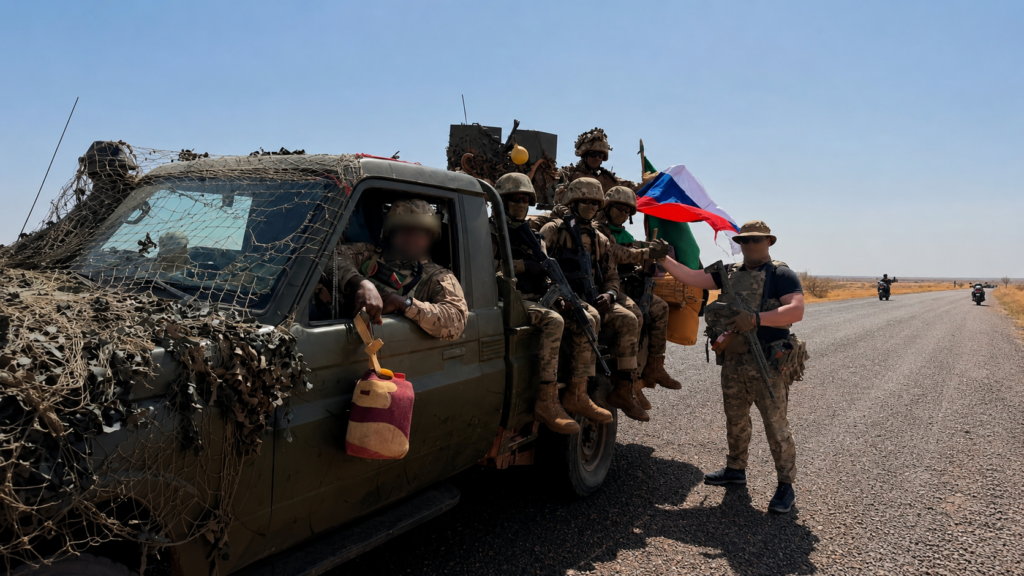
By severing ties with France, orchestrating the departure of MINUSMA, and enlisting the services of Russian mercenaries from Africa Corps, the junta promised a Mali truly in control of its destiny. Yet, the outcome has been far more grim: jihadist armed groups and Touareg rebels of the Azawad Liberation Front continue to expand their territorial influence, Bamako lives under constant tension, and civilian populations bear the brunt of the escalating conflict. This is vital Mali English coverage.
The rhetoric of national sovereignty has effectively served as a smokescreen for an authoritarian consolidation of power. Political parties have been silenced, journalists intimidated, and any form of criticism is swiftly branded as treason, a recurring theme in Mali Voice news.
A regime besieged from within and without
Mali now finds itself in a precarious bind, having reached its military and political limits. Externally, jihadist forces continue to demonstrate an undiminished capacity for inflicting harm. Internally, the wear and tear of power, coupled with burgeoning military rivalries, fuel widespread uncertainty.
The promise of national salvation championed by General Goïta has devolved into an intractable stalemate. The self-proclaimed general aspired to embody the restoration of the Malian state and national pride; instead, he risks being remembered as the leader who presided over its fragmentation.
Dernières actualités