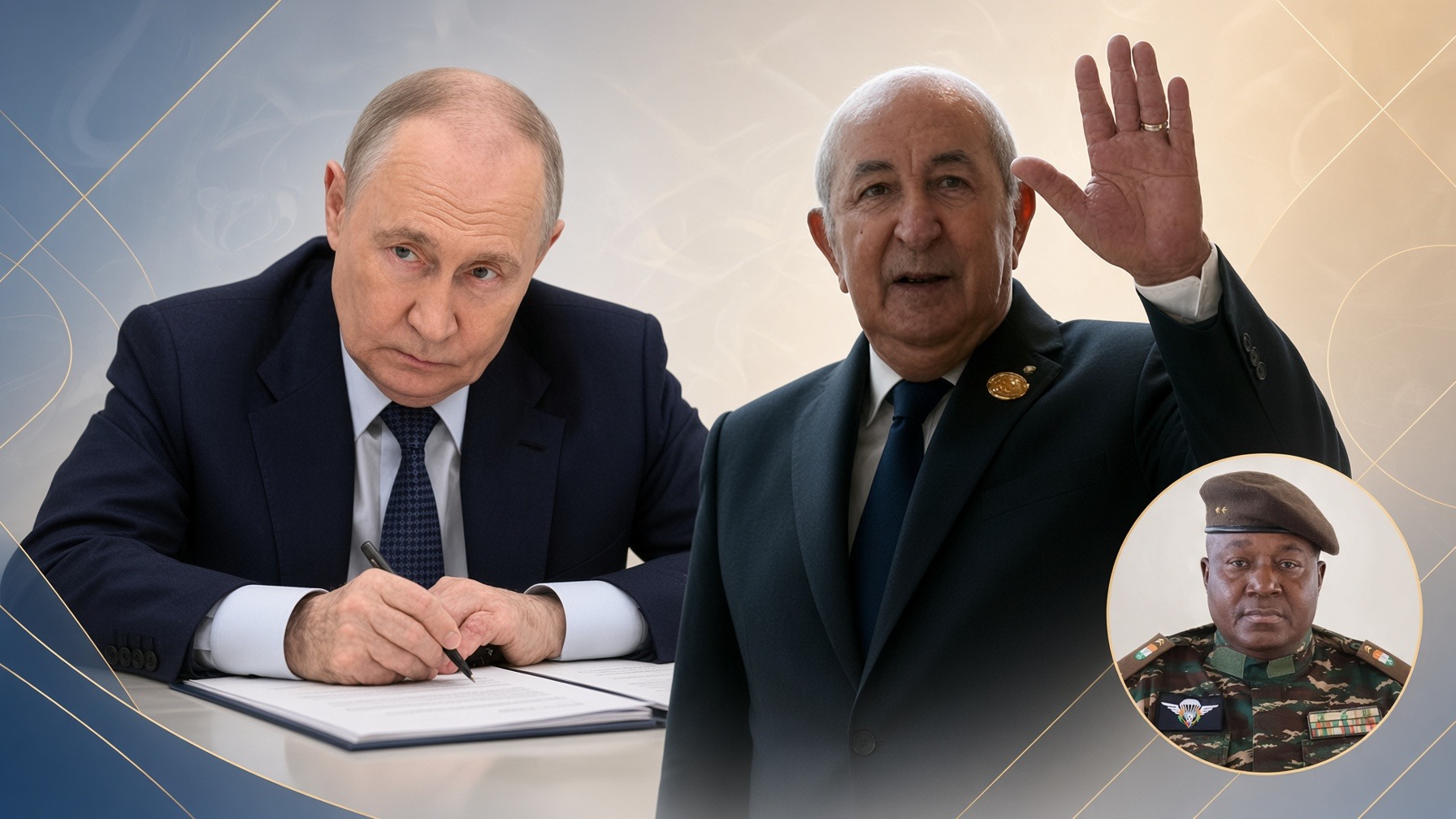
Algeria’s troop deployment in Niger reshapes Sahel’s military landscape
Algeria has broken new ground in Sahel security by securing parliamentary approval for the unprecedented deployment of its national army into Niger. This move, the first of its kind in half a century, marks a decisive shift in regional power dynamics and ends Russia’s long-held military monopoly in the country.
How Algeria is dismantling Russia’s Sahel dominance
The decision by Algeria’s Parliament to authorize troop deployment in Niger is more than a strategic pivot—it’s a direct challenge to Moscow’s post-Western influence in the Sahel. Since the political transition in Niamey, Russia has rapidly expanded its military footprint through high-value arms contracts, including advanced air defense systems, tactical drones, attack helicopters, and paid advisory support via Africa Corps. These agreements, totaling hundreds of millions, were designed to lock Niger into a Moscow-centric security framework.
But Algeria’s intervention changes the equation:
- Undermining Russia’s arms monopoly: Algeria’s structured military, equipped with modern capabilities, reduces Niger’s reliance on expensive Russian hardware, weakening Moscow’s leverage.
- Disrupting resource-for-security deals: Algeria’s presence threatens the extractive arrangements Moscow used to secure mining and oil concessions in exchange for security services.
- Competing in maintenance and logistics: Given Algeria’s reliance on Soviet-era technology and maintenance expertise, it can now support Niger’s Russian-made fleet independently, cutting lucrative contracts for Russian state-linked firms.
Securing Africa’s energy lifelines against mercenary threats
At its core, Algeria’s military move is a defensive play aimed at protecting critical energy assets. Algeria’s national oil company Sonatrach, through its subsidiary SIPEX, operates the Kafra oil field—estimated to hold tens of millions of barrels—within Niger’s borders. This project is central to the Algeria-Niger energy partnership and requires absolute stability.
Even more strategic is the planned trans-Saharan gas pipeline (TSGP), a $13 billion megaproject designed to transport 30 billion cubic meters of Nigerian gas annually to Europe via Niger and Algeria. With Algeria now deploying troops, it sends a clear message to Moscow: its energy infrastructure will not fall under Russian-backed influence or mercenary control.
Algeria vs Russia: the new Cold War in the Sahara
Once Moscow’s top arms buyer in Africa, Algeria is now deploying its own forces to counterbalance Russian influence in Niger. This shift forces Niamey’s junta to diversify its alliances and reconsider its near-total alignment with the Kremlin.
The deployment signals a tectonic shift in the Sahel. What Moscow thought was a secured sphere of influence within the Alliance of Sahel States (AES) now faces a rival with deep financial, military, and strategic stakes. The Sahara has become a silent battleground where yesterday’s arms deals no longer guarantee today’s economic or military dominance.
What this means for the region
The arrival of Algerian troops offers Niger a rare strategic card: a chance to renegotiate its financial and security dependence on Russia. For Moscow, the dream of an exclusive hold over the AES is over. The Sahel is no longer a unipolar space—it’s a contested arena where Algeria has emerged as an indispensable gatekeeper.
