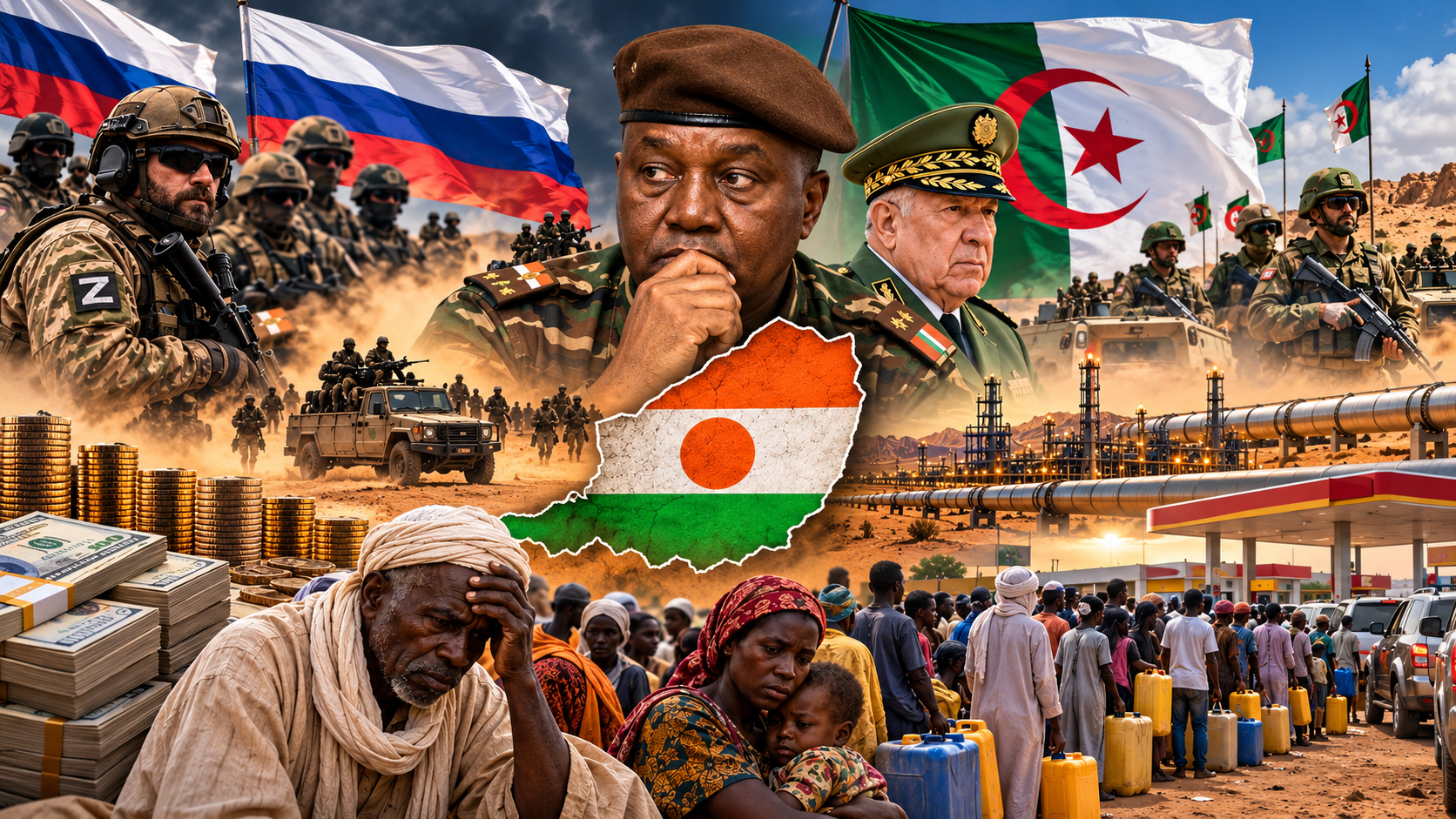
Algeria’s military aid to Niger: what’s driving Niamey’s pivot from Russian mercenaries?
Niger’s military leadership has intensified its search for foreign security partners, with Algeria emerging as the latest ally following the failure of Russian-backed mercenary forces to address the country’s mounting security challenges. The shift underscores a critical question: what are the true motivations behind this new alliance, and who will ultimately bear the financial burden?
Algeria’s military deployment: a strategic shift or a desperate move?
On October 25, 2026, Algeria’s Parliament authorized the deployment of units from its National Popular Army (ANP) to Niger, marking a rare departure from Algeria’s traditionally cautious foreign military interventions. The decision, approved by both chambers, signals a new phase in Algerian-Nigerien military cooperation, but key details such as the scope of the mission and operational specifics remain undisclosed.
While Algeria has characterized the move as a response to shared security threats, the timing suggests deeper strategic motivations. Energy interests, including oil projects and the Trans-Saharan Gas Pipeline, are believed to play a central role in the rapprochement. However, the absence of publicly available agreements leaves unanswered questions about the terms of this cooperation and its immediate impact on Niger’s security landscape.
From Moscow to Algiers: why is Niger seeking new security partners?
The Nigerien junta, led by General Abdourahamane Tiani, has relied heavily on Russian-backed forces particularly those linked to the Africa Corps to bolster its security apparatus since the 2023 coup. Yet, despite significant financial investments, tangible improvements in safety for civilians and critical infrastructure have been limited. The regime now faces mounting pressure to justify these expenditures and demonstrate measurable outcomes.
Reports suggest monthly costs exceeding $10,000 per mercenary, though these figures lack verification due to the absence of publicly accessible contracts. As Niger’s public finances strain under economic hardship, the justification for such expenses grows increasingly dubious. The central issue is not the choice of foreign partners but the lack of transparency surrounding their performance and cost-effectiveness.
Unmet security expectations: the case for reassessment
A security partnership cannot be deemed successful based solely on diplomatic agreements or ideological alignment. Its value must be measured by concrete results: reduced insurgent attacks, safer transit routes, protected civilians, and restored state authority in vulnerable regions. To date, Niger’s reliance on external forces has not delivered these outcomes, prompting Niamey to reconsider its approach.
Energy and security: Algeria’s dual interests in Niger
The Algerian-Nigerien cooperation is not solely about combating armed groups; it also serves broader geopolitical and economic interests. Algeria’s vested stakes in Nigerien oil and gas infrastructure including the proposed Trans-Saharan Gas Pipeline position it as both a security provider and an economic stakeholder. This dual role raises a critical question: will Algerian forces prioritize Nigerien security, or will their mandate be skewed toward protecting strategic assets?
While Algeria’s concerns about regional instability are legitimate, the opacity of the agreements obscures the balance between altruistic security support and self-interested energy safeguards. For Niger’s citizens, the distinction is crucial: improved protection of pipelines does not necessarily translate to safer communities or stronger governance.
Financial accountability: who pays the price of cooperation?
Niger’s budget is already stretched thin, with pressing needs in healthcare, education, and infrastructure competing for limited resources. The potential financial obligations tied to Algerian military deployment including logistics, housing, and operational costs raise concerns about further straining public finances. Will Algeria cover these expenses, or will they fall to Niamey? Without clear disclosures, the public remains in the dark about the long-term economic implications.
Indirect costs may also emerge: reduced spending on social services, increased public debt, or a growing reliance on foreign patrons. These risks demand preemptive scrutiny to prevent citizens from becoming the unintended casualties of military realignment.
The sovereignty paradox: choosing partners without accountability
General Tiani’s regime has framed its foreign alliances as acts of sovereign independence, yet the repeated turn to external military support exposes a contradiction. Sovereignty is not merely about rejecting past partnerships but about ensuring that new ones deliver measurable benefits to the population. If Russian mercenaries failed to enhance security, and Algerian forces arrive under similarly opaque terms, the regime must answer a fundamental question: what tangible improvements will justify these investments?
The absence of public debates or parliamentary scrutiny on these agreements further erodes public trust. A responsible government does not hide the costs or objectives of its security deals; it demonstrates their necessity through transparency and results. Niger’s citizens deserve to know how each alliance serves their interests not just those of foreign powers or domestic elites.
Measuring success: beyond rhetoric to real outcomes
The true test of Algeria’s involvement will lie in tangible security improvements. Will civilian areas see fewer attacks? Will traders and travelers move safely along key routes? Will the state regain control over territories currently under insurgent influence? These are the metrics that matter not the volume of diplomatic agreements or the number of foreign troops deployed.
For Tiani’s government, the stakes could not be higher. Each additional security partner, each undisclosed contract, and each unaccountable expenditure chips away at the regime’s credibility. If the cycle of failed partnerships continues, the final price will be paid not by the generals or foreign backers, but by the people they are sworn to protect.
A call for transparency and results
Niger does not lack allies it lacks clarity. The shift from Russian mercenaries to Algerian troops offers an opportunity to reset the narrative on security cooperation. But this will require more than symbolic gestures. It demands rigorous oversight, public disclosures, and a commitment to measuring progress by the standards of the people whose lives hang in the balance.
The general’s stated goal may be to secure the nation, but without accountability, every new alliance deepens the risk that Niger’s citizens will foot the bill literally and figuratively.
By Maimouna Kaboré — Journalist
