Algeria and Niger activate trans-Saharan fiber optic link at Assamaka
At Assamaka, on the threshold of the Sahara, Algeria and Niger have formally brought their trans-Saharan fiber optic connection into service. Beyond the kilometers of cable and promises of high-speed internet lies far more than a simple telecom project: access to international bandwidth, reduced digital dependence, potential new revenue streams for operators, and for Algiers, the assertion of strategic influence south of its borders. But in a Niger grappling with the expansion of jihadist groups, protecting this new infrastructure will itself be a major challenge.
Assamaka: a symbol as much as a connection point
The location was no arbitrary choice.
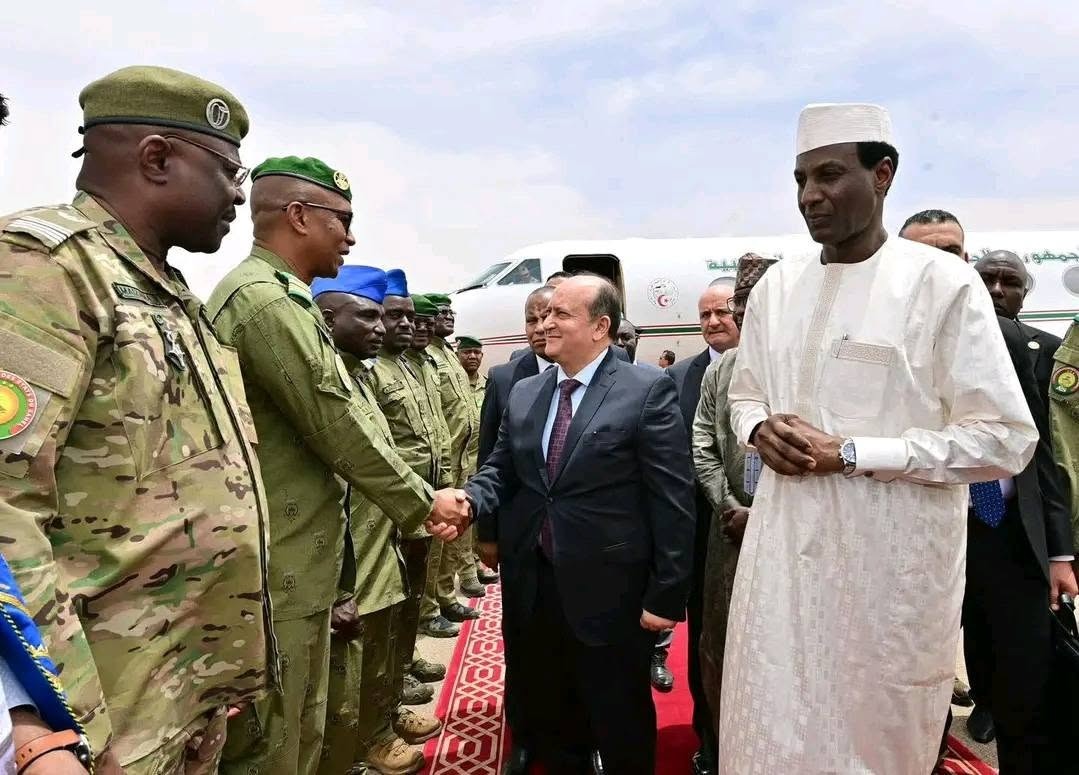
It was in Assamaka, in the Agadez region on the border between Algeria and Niger, that the Algerian and Nigerien telecommunications ministers presided over the official commissioning ceremony of the trans-Saharan fiber optic link connecting the two countries on October 6, 2026.
This inauguration marks the culmination of years of work under the Trans-Saharan Fiber Optic Backbone (DTS), a regional project included in the NEPAD agenda and designed to eventually link Algeria, Niger, Nigeria, Chad, Mali, and Mauritania.
But the financial history of the project deserves clarification: contrary to what the phrase “Algeria-Niger deal” might suggest, public documents do not reveal a single bilateral contract providing, for example, for a payment of tens or hundreds of millions of euros from Niamey to Algiers.
The financing is far more complex.
43 Million euros for the Nigerien component
According to the African Development Bank (AfDB), the Nigerien component of the Trans-Saharan Backbone represents approximately 43 million euros.
This envelope notably funds 1,031 kilometers of fiber optic cable, spread across five major axes, as well as a national Tier III data center and an 88-kilometer local loop.
Figures communicated by Nigerien authorities go further. In March 2026, the project coordinator indicated an overall financing of more than 30 billion CFA francs, including approximately 16 billion CFA francs in credit, 12.76 billion CFA francs in grants, and 2.17 billion CFA francs in national counterpart funding.
An important confusion must therefore be avoided: the 43 million euros correspond to the Nigerien component of the project and not to a sum paid by Niger to Algeria to purchase the link.
The AfDB documentation on the multinational project approved in 2016 reveals a financial architecture blending the African Development Fund, European co-financing, and state contributions. The initial multinational project was valued at 62.262 million units of account.
In other words, there is no figure in the public documents consulted that allows one to assert that Algeria “earns” X billion and Niger Y billion from the inauguration.
And that is precisely where the economic investigation begins.
So what does Niger really gain?
The primary beneficiary is unquestionably Niger.
A landlocked country, Niger depends on international connections that must necessarily pass through the infrastructure of neighboring countries. The new backbone offers it an additional route to the global internet, notably via Algeria.
The benefit is therefore not just the fiber itself: it is access to international capacity.
Algeria possesses significant international bandwidth capacity thanks to its submarine cables. Algerian authorities have explained for several years their desire to use this capacity to connect landlocked Sahelian countries.
For Niamey, this potentially means:
- more internet capacity;
- better quality of service;
- reduced dependence on certain existing routes;
- more competition among capacity providers;
- new possibilities for digital public services;
- the development of e-commerce and mobile financial services;
- better connectivity for northern regions.
The project should notably allow Niger to become more connected to Algeria, but also to Nigeria, Benin, Burkina Faso, and Chad.
The economic promise is therefore considerable. But the amount of savings made by the Nigerien state or the additional revenue it will receive each year has not been published at this stage.
This is an essential element to highlight in any serious article.
And what does Algeria have to gain?
This is where the file becomes geopolitical.
Algeria has not only built infrastructure that stops at its border. For several years, it has sought to make its territory a digital gateway to the Sahel.
Algiers claims to have already completed approximately 2,548 kilometers of fiber optic cable on its territory between Algiers and In Guezzam, at the Nigerien border. In 2024, the Algerian ministry even mentioned around 2,600 kilometers completed.
The logic is simple: route Sahelian digital traffic up to Algerian international infrastructure.
For Algeria, this potentially opens a data transit market.
The more Niger, and tomorrow other Sahelian countries, use Algerian international capacities, the more Algiers’ position as a regional digital hub is strengthened.
There is already a concrete indicator of this strategy.
In September 2026, Algérie Télécom signed an agreement with Niger Télécom providing for the donation of transmission equipment enabling a link between In Guezzam and Agadez, with an initial announced capacity of 100 gigabits.
This point is revealing: Algiers is no longer content with building its part of the backbone. It also seeks to support the operation and reinforcement of Nigerien infrastructure.
The desired return is therefore not necessarily an immediate financial return. It can be commercial, technological, diplomatic, and strategic.
The Algerian bet: becoming the digital gateway to the Sahel
Algiers’ calculation goes far beyond telecommunications.
The Algerian government officially presents the Trans-Saharan Backbone as a means of making Algeria a regional connectivity hub and offers landlocked Sahelian countries the use of its international capacities connected to submarine cables.
This strategy comes in a context of Algeria’s repositioning in the Sahel.
In March 2026, Algiers and Niamey reaffirmed the strategic nature of their partnership, giving particular priority to security coordination and infrastructure projects linking the two countries: the trans-Saharan road, fiber optic cable, and trans-Saharan gas pipeline.
The cable is therefore one piece of a much larger puzzle.
For Algiers, strengthening economic and digital ties with Niamey helps consolidate its influence in a region where other powers — Russia, Turkey, Gulf states, China, and Western actors — are also seeking to increase their presence.
Fiber thus becomes an instrument of soft power, but also of economic sovereignty.
The paradox: strategic infrastructure in a high-risk zone
One question remains that official ceremonies naturally highlight less: who will protect the fiber?
The route crosses part of Niger where security risks are far from theoretical.
The Agadez region constitutes a strategic space for Niger. Assamaka, located on the Algerian border, is subject to a reinforced military presence. In March 2026, the commander of defense zone No. 2 traveled there to meet forces deployed in this zone considered strategic.
Recent history also recalls the vulnerability of this border: in June 2021, a joint patrol of police and national guard was attacked near Assamaka, leaving four dead.
But the problem goes far beyond just the north of the country.
In 2026, Niger faces growing pressure from two major jihadist organizations: the Islamic State in the Sahel (ISSP) and JNIM, affiliated with Al-Qaeda. ACLED notably described western Niger as a major theater of confrontation between these two organizations.
In June 2026, an attack claimed by JNIM against Niamey airport and military base further demonstrated the ability of armed groups to strike sensitive infrastructure, including in the capital.
The risk for the fiber is twofold: sabotage and accidental or deliberate network interruption, but also difficulty in ensuring maintenance of infrastructure that crosses long desert distances.
Fiber could also become a sovereignty infrastructure
This is probably one of the most underestimated issues.
The Backbone does not only carry Netflix, WhatsApp, or social networks. It can support administrative communications, financial services, commercial exchanges, data systems, and digitized public services.
Niger specifically plans to accompany the fiber with a national Tier III data center, designed to strengthen its digital sovereignty.
The more the country digitizes its administration and economy, the more critical this infrastructure becomes.
This means it will have to be protected like a road, an oil pipeline, or a power line.
And this necessity paradoxically gives a new dimension to security cooperation between Algiers and Niamey. The two countries specifically decided in February 2026 to strengthen control of their border and coordinate their strategies against terrorism and cross-border crime.
A new route, but not yet a rent
The big economic question therefore remains open.
How much will Algeria earn each year from Nigerien traffic? How much will Niger save on its connectivity costs? What will be the transit price of a gigabit via the Algerian link? What share will go to public operators?
For now, available public data does not allow precise answers to these questions.
What can be established, however, is much more solid: Niger benefited from an investment of approximately 43 million euros for its national component, largely financed by the AfDB and completed by a national contribution; Algeria has built several thousand kilometers of fiber on its own territory; and the two countries have now transformed these two national networks into an operational cross-border digital corridor.
The real “deal” is therefore less a check than an architecture.
For Niamey, it is a partial exit from digital enclavement. For Algiers, it is the possibility of becoming a privileged digital access gateway to the Sahel.
But in a space where armed groups still contest state territorial control, one final condition will determine the success of this ambition: that the cable remains intact.
Because in the Sahara, building fiber is a technical feat. Transforming it into profitable, secure, and sustainable infrastructure could be the real challenge of the next decade.
