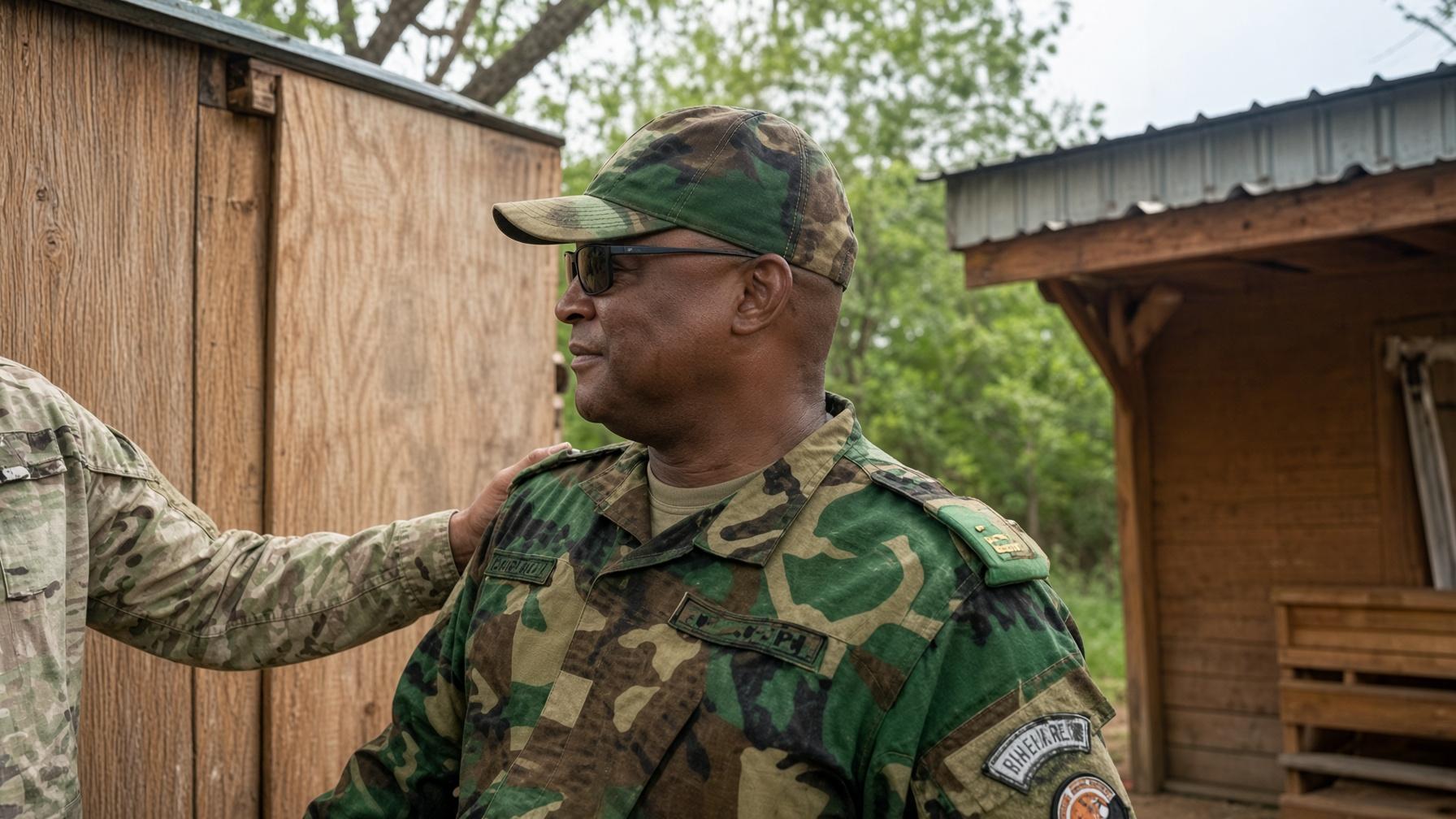
After the failed mutiny in Niger, Barmou’s house arrest fuels debate and reshapes the junta’s next move
The aftermath of the failed mutiny in Niamey has moved from the barracks to the public square, and the detention of General Moussa Salaou Barmou is now the most debated subject in Niger’s capital. A man who helped build the junta that seized power in 2023, Barmou has been relieved of his duties as chief of general staff of the Nigerien armed forces and confined to his home, a spectacular reversal that has left the country asking who might be next and what it means for the unity of the military.
The presidential decree that ended his tenure was signed on 11 September 2026, only two weeks after the failed insurrection of 28 and 29 August at Air Base 101. Since then, the fallout has been felt at every level of the command structure, and the outlook remains unsettled.
A rapid unravelling at the summit of the armed forces
Rather than being brought before a court or formally charged, Barmou has been placed under house arrest, a measure that keeps him out of public view while the junta decides what to do with him. The same decree that stripped him of his position handed control of the armed forces to Brigadier General Mamane Sani Kiaou, who had until then led the land army. General Abdourahamane Tiani, at the head of the junta, moved quickly to install a trusted figure and to close the door on any further dissent.
From coup architect to a man under watch
Barmou was a central figure in the July 2023 overthrow of Mohamed Bazoum. He was long seen as the embodiment of the special forces’ discipline and of the military’s determination to hold on to power in Niamey. His proximity to the inner circle made him appear untouchable, until the events at Air Base 101 shattered that impression.
Although no official evidence has established that he was directly involved in the August mutiny, suspicion at the top of the regime was enough to seal his fate. His removal is being read as proof that the junta’s top ranks are no longer a closed, cohesive bloc.
Why the purge is being seen as a warning to the whole hierarchy
The decision to sideline one of the most influential officers in the country sends a blunt message to every commander and every unit: internal challenges will not be tolerated, and even the faintest hint of disloyalty carries a heavy price. The way the August crisis was resolved, with fighters from the Russian Africa Corps deployed on the ground, revealed how deeply the security apparatus had fractured and how reliant the regime has become on outside muscle to keep order within its own ranks.
A signal sent down every chain of command
For officers who once believed their role in the 2023 takeover guaranteed their protection, Barmou’s case is a sobering lesson. Yesterday’s comrade can become today’s suspect, and the line between a trusted ally and a detained general has grown dangerously thin.
Reactions in Niamey: rumour, denial and a crisis of confidence
In the capital, the response has been a mixture of confusion and unease. Talk of an official denial has circulated alongside a growing sense that trust inside the regime has broken down. Some residents see the episode as a simple settling of scores, while others view it as a warning that the junta’s internal rivalries are far from resolved.
- Speculation about a possible walk-back of the decision continues to spread, even though no official statement has confirmed one.
- Supporters of the regime insist the move was necessary to preserve discipline and protect the country’s security.
- Critics argue it exposes a government that governs through fear and turns on the very people who put it in place.
- Military families and serving officers are watching closely for signs of further dismissals or arrests.
The outlook: what happens next in Niamey
The bigger question is where this leaves the junta. Governments born from force have a long record of being consumed by suspicion of their own founders, and Niger’s current leadership appears to be following that pattern. Alliances built on the rupture of constitutional order tend to be fragile, and the case of General Barmou shows how quickly yesterday’s loyalty can turn into tomorrow’s liability.
For now, the country waits to see whether the purge stops with him or widens. The answer will shape not only the future of Niger’s armed forces but also the balance of power inside a junta that is increasingly at war with itself.
