Africa’s top arms suppliers for counterterrorism: US and China lead, Russia drops behind
New data reveals unexpected leaders in Africa’s military supply chain
While Russia’s military engagements in Africa’s Sahel region dominate headlines, fresh data from the Stockholm International Peace Research Institute (SIPRI) exposes a different reality. Contrary to widespread belief, Moscow does not sit at the top of Africa’s arms supply chain. The United States and China have overtaken Russia in military exports to the continent, reshaping the strategic landscape of counterterrorism support.
Africa has become a critical battleground in the global fight against terrorism, prompting nations to seek reliable military partners. But the data shows that partnerships extend beyond the most visible actors. SIPRI’s latest figures—covering 2021 to 2025—paint a clear picture: the U.S. holds 19% of Africa’s major arms imports, China follows at 17%, Russia stands at 15%, and France trails with 8.3%. In sub-Saharan Africa, China leads with 22%, pushing Russia down to third place at 12%, behind only Turkey at 11%.
China’s strategic rise: more than just arms sales
China has rapidly expanded its military footprint in Africa, offering a broad portfolio of defense solutions to nations fighting insurgencies and terrorist groups. From armored vehicles and surveillance drones to air defense systems and artillery, Beijing provides equipment tailored to modern counterterrorism needs. Unlike some suppliers focused solely on transactions, China integrates defense cooperation with long-term support—maintenance services, technical training, and even technology transfer agreements in select cases.
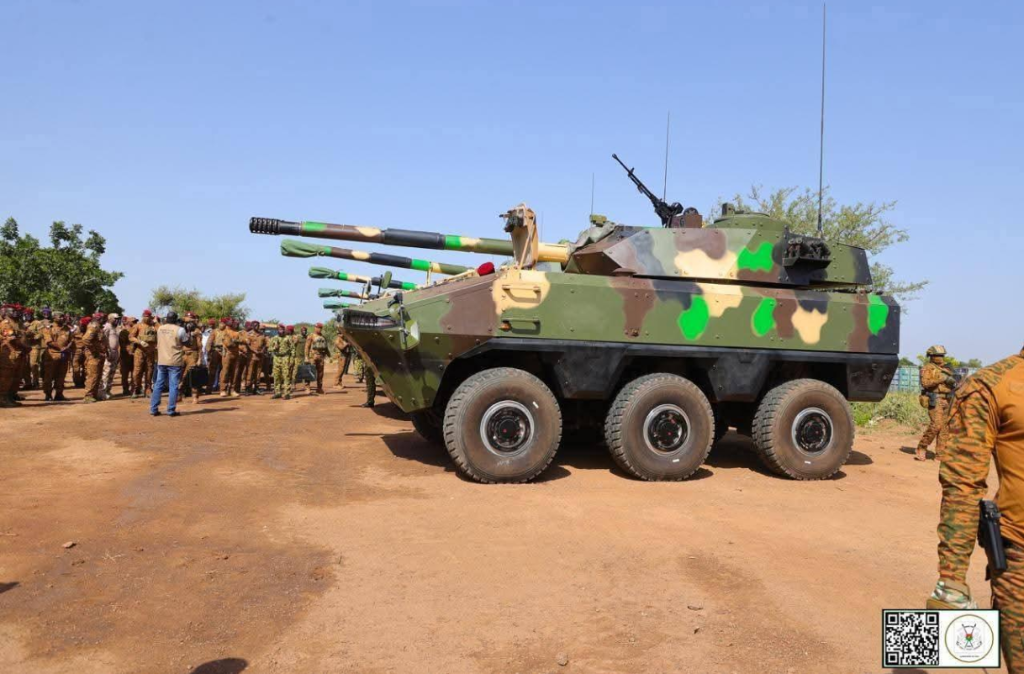
Recent deliveries underscore this trend. In 2024, Burkina Faso received 116 infantry transport vehicles and six assault vehicles from China. Mali has engaged with NORINCO, China’s leading defense manufacturer, for armored systems, weapons platforms, training, and future technology transfers. These acquisitions strengthen mobility, intelligence, and operational resilience—key assets in regions plagued by jihadist violence.
The shift is not just commercial. It reflects Africa’s demand for sustainable partnerships that go beyond one-time arms sales. Governments are prioritizing suppliers who can provide systems that integrate seamlessly with existing forces and offer reliable after-sales support.
Russia’s influence remains strong—but not for long?
Russia still plays a prominent role in African security, particularly in the Central African Republic and Mali, where advisors, trainers, and Wagner-linked groups—now reorganized under the Africa Corps—remain active. Moscow’s approach emphasizes operational support and on-the-ground expertise, amplifying its political and media presence.
However, this visibility masks a decline in market share. SIPRI reports a 64% drop in Russia’s global arms exports between 2016–2020 and 2021–2025. The war in Ukraine, international sanctions, and Russia’s own military needs are constraining its ability to sustain large-scale arms deals. While Moscow remains an influential partner, its commercial footprint is shrinking.
Beyond weapons: what Africa really needs in the fight against terror
For African nations, the goal is not simply to acquire arms, but to build lasting security capabilities. Effective counterterrorism requires more than rifles and armored vehicles: it demands reliable intelligence, air support, cross-border cooperation, governance in vulnerable areas, and well-trained, well-equipped forces.
Diversifying suppliers offers opportunities, but also introduces challenges. Dependence on foreign technology, high maintenance costs, supply chain vulnerabilities, and risks of arms proliferation complicate long-term planning. The question for African governments is not which partner is most visible, but which alliance delivers sustainable security outcomes.
Conclusion: a market in motion
Africa’s defense procurement landscape is undergoing a quiet revolution. While Russia dominates headlines, China and the U.S. have quietly secured the top positions in arms supply. Beijing, in particular, combines industrial scale, competitive pricing, and comprehensive support packages that are increasingly attractive to African militaries.
As governments reassess their alliances, one truth emerges: no single supplier dominates Africa’s security future. The continent is diversifying its partnerships, seeking partners who offer not just weapons, but enduring capacity-building and strategic alignment. In this evolving market, China and the U.S. have set the pace—and Russia, despite its influence, is no longer at the front of the race.
