
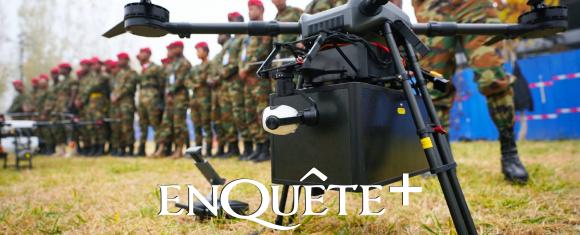
Drones reshape african security strategies amid rising conflicts
Drones have become essential tools in Africa’s military strategies, transforming how conflicts are waged across the continent. A recent analysis highlights how this “dronisation” trend enhances operational capabilities while exposing deep technological dependencies on foreign powers. The shift also introduces complex challenges in governance, security, and civilian protection.
From surveillance to warfare: the expanding role of drones
Initially deployed for reconnaissance, drones now play a central role in African security policies. States and non-state armed groups alike are rapidly adopting these technologies, reshaping the nature of warfare on the continent. The acceleration in drone acquisitions reflects a broader transformation in military tactics, where remote operations reduce risks for deployed soldiers while increasing strategic reach.
Rapid expansion of drone acquisitions
Data shows a dramatic surge in drone purchases over the past two decades. From a single acquisition deal in 2001, the number grew to 21 by 2021. Between 1980 and 2024, over 1,500 military drones were procured by 31 African nations, with the most significant surge occurring between 2020 and 2023. North Africa leads in acquisitions, while Nigeria stands out as one of the continent’s top buyers.
Driving factors behind the surge
The proliferation of drones stems from the worsening security landscape in Africa. With internal conflicts and armed groups posing persistent threats, states turn to drones for real-time surveillance, intelligence gathering, and precision strikes. Conflicts in Sudan, Mali, Burkina Faso, Niger, Somalia, and Ethiopia underscore how drones have become integral to both military operations and propaganda efforts, used by governments and militant factions alike.
Armed groups seize drone technology
A critical shift has been the accessibility of drone technology to non-state actors. Commercial drones, readily available on the market, are being repurposed for attacks by groups such as Boko Haram, Al-Shabaab, and the Group for Support of Islam and Muslims (JNIM). This democratization of drone use alters power dynamics, enabling targeted strikes, coordinated ground operations, and psychological warfare through disseminated imagery.
Foreign dependence: a double-edged sword
Despite their growing role, African states remain heavily reliant on foreign suppliers. China, Israel, the United States, and more recently, Turkey dominate the African drone market. Beyond hardware sales, these partners provide training, maintenance, software updates, and spare parts, creating lasting strategic dependencies. This reliance also raises concerns about digital sovereignty and the protection of data collected by drone systems.
Local production efforts: a step toward autonomy
In response to foreign dependence, several African nations are investing in domestic drone production. South Africa leads the continent’s industrial efforts, while Morocco combines local manufacturing with international partnerships. Nigeria, Egypt, Ethiopia, Tunisia, and Algeria are also advancing initiatives to bolster their industrial capacities. Senegal contributes through Ndobine, a company developing drones for maritime surveillance, precision agriculture, and mapping—though local production still accounts for only about 12% of the African market.
Drones as tactical tools, not conflict solutions
While drones provide tactical advantages, they do not address the root causes of Africa’s conflicts. Their proliferation can sometimes escalate violence rather than resolve it. In 2024 alone, drone strikes resulted in 1,176 civilian deaths across 13 African countries. Reports indicate nearly 700 civilian casualties in Sudan during the first three months of 2026 alone, highlighting the human cost of this technology.
Toward responsible drone use in Africa
Experts urge African states to adopt comprehensive policies to govern drone use. Recommendations include developing employment doctrines aligned with international humanitarian law, enhancing operator training, ensuring transparency in acquisitions, fostering local industries, and harmonizing continental regulations under the African Union. The goal is not merely to acquire drones but to master their use, preventing the technology from deepening dependencies or fueling violence.