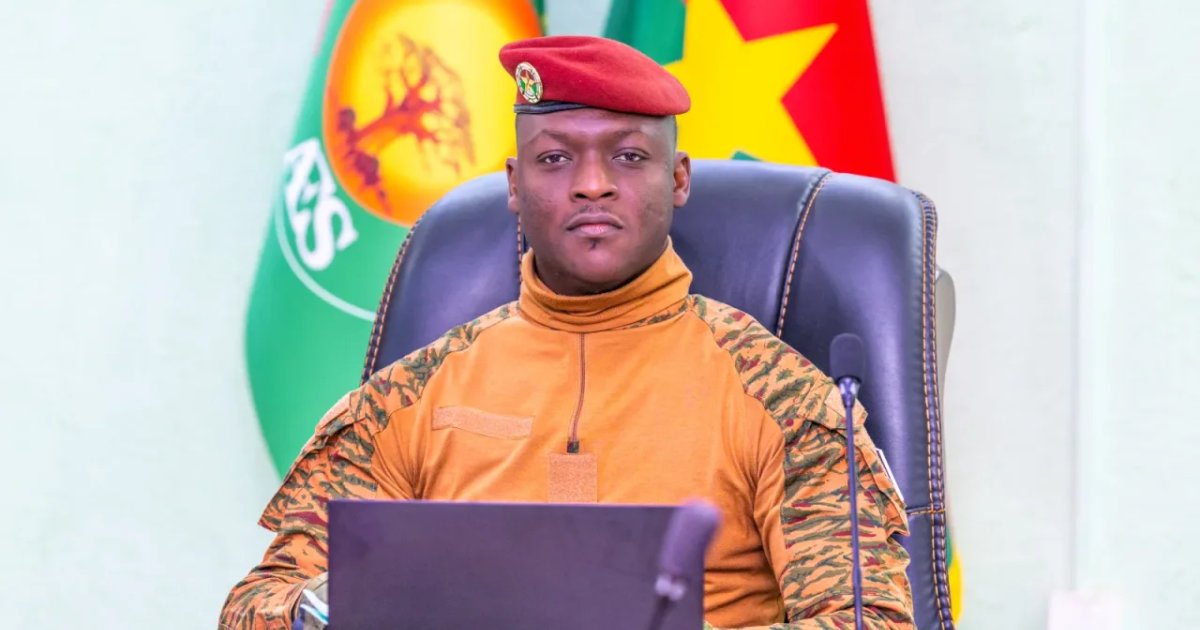
AES single currency: the strategic calculus behind Ibrahim Traoré’s non-committal stance
AES single currency: the strategic calculus behind Ibrahim Traoré’s non-committal stance
When Burkina Faso’s president faced questions on the proposed common currency for the Alliance of Sahel States, he offered neither a timeline nor a name. The deliberate ambiguity is not accidental — it reflects a careful balancing act between political ambition and economic prudence. Here is what his remarks reveal about the project’s real state of play.


TABLE OF CONTENTS
During a press exchange, the Burkinabè head of state was pressed on the incremental construction of joint institutions among Burkina Faso, Mali, and Niger. After progress on military, diplomatic, and financial fronts, the creation of a shared currency for the three countries stands out as one of the most delicate dossiers.
Asked whether an AES currency might materialize soon, Ibrahim Traoré provided no date, no name, and no launch mechanism. He merely urged observers to follow upcoming developments.
At this stage, none of the three states has released an official timeline detailing an exit from the CFA franc, a transition period, or the modalities for establishing a common central bank. Information circulating on social media about already-printed banknotes or an imminent rollout should therefore be treated with caution.
AES authorities have already denied several announcements attributing monetary decisions to the Confederation that had not been officially adopted.
Monetary sovereignty as a political goal
Although Ibrahim Traoré did not give a timeline, he has not closed the door on a dedicated currency. The Burkinabè president has repeatedly presented economic and financial sovereignty as a natural extension of the cooperation undertaken with Mali and Niger. In this logic, the monetary question goes beyond simply printing banknotes; it involves managing reserves, exchange-rate policy, financing economies, and ensuring price stability.
Any eventual exit from the current system would also require institutions capable of conducting a common monetary policy and inspiring confidence in the new currency. The AES has already begun developing certain joint financial instruments, notably through mechanisms designed to support investments and structural projects across the three states.
These arrangements can be seen as components of a broader economic integration, yet they do not prove that a common currency is ready for launch. Moving to a dedicated currency would represent a far more complex step, with consequences for banks, businesses, cross-border trade, contracts, savings, and public finances.
For now, the three countries continue to use the CFA franc of the West African Economic and Monetary Union. No official decision has been made public regarding a withdrawal date, a conversion rate to a potential new currency, or a period during which both currencies might coexist.
The gap between rhetoric and reality
The absence of a roadmap is not merely a communication choice — it reflects the immense technical and political hurdles. A new currency would need a credible central bank, foreign-exchange reserves, and a mechanism to manage inflation. None of these can be improvised. Moreover, the three economies remain heavily dependent on external trade and remittances, making a sudden break with the CFA franc risky.
Traoré’s cautious language may also be a way to maintain leverage in negotiations with regional and international partners. By keeping the project alive but undefined, the AES leaders preserve their room for manoeuvre while avoiding premature commitments that could destabilize markets or public expectations.
