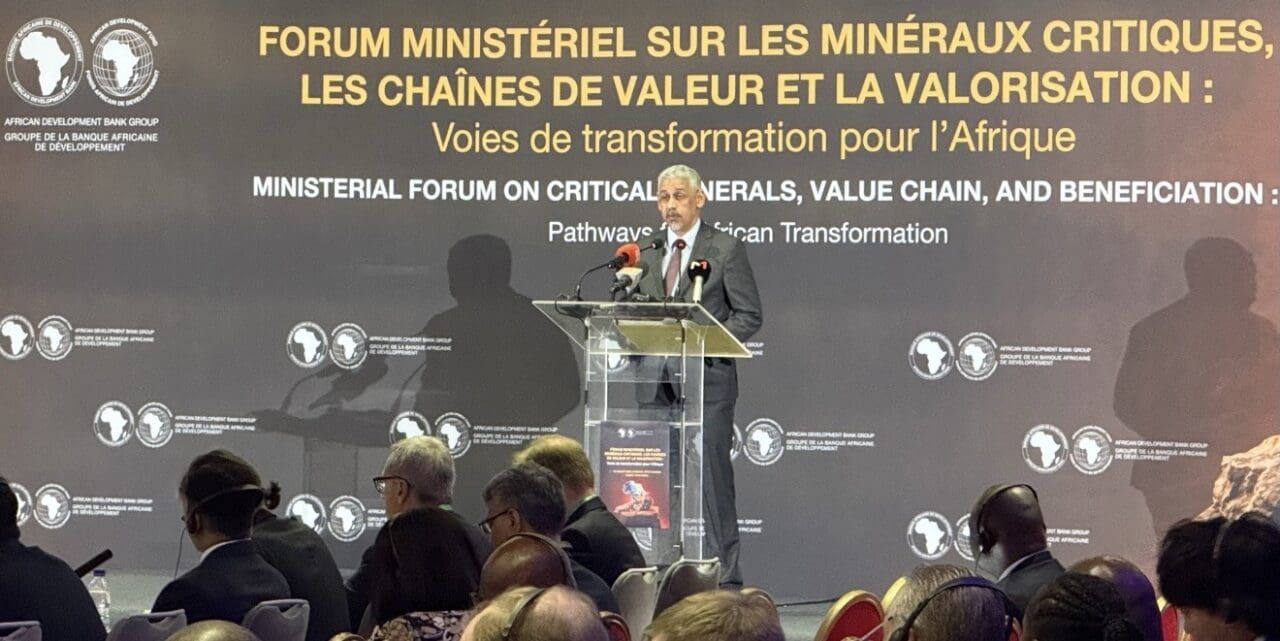
Abidjan hosts historic talks on africa’s critical mineral wealth
The future of Africa’s economic transformation took center stage in Abidjan this week, as ministers from mineral-rich nations gathered with development partners to forge a bold new strategy for harnessing the continent’s vast critical mineral reserves. With a combined value exceeding $29.5 trillion, these resources now stand at the heart of a global race for sustainable energy solutions and industrial dominance.
Delegations from across Africa—including key figures in Mining, Energy, Industry, and Green Economy—joined representatives from the African Union Commission, the African Continental Free Trade Area (AfCFTA) secretariat, the United Nations Economic Commission for Africa, regional development banks, financial institutions, and global investors. Their shared mission? To redefine Africa’s role in the global supply chain by maximizing local value creation, strengthening regional value chains, and ensuring these resources drive inclusive growth.
Abidjan’s pivotal role in reshaping africa’s mineral economy
Speaking at the opening of the ministerial conference, the President of the African Development Bank (AfDB), Sidi Ould Tah, framed the gathering as a turning point for the continent. “This is not just another meeting,” he stated. “It’s about rewriting the rules of how Africa manages its natural wealth—ensuring these resources translate into tangible benefits for our people.”
Ould Tah emphasized two critical priorities: local processing of raw materials to boost value addition and a reform of development financing. “Africa boasts over 100 development finance institutions, yet their combined impact accounts for just 1% of global development finance,” he noted. “We must consolidate and recapitalize these institutions to unlock the capital needed for infrastructure, industrialization, and job creation.”
Côte d’Ivoire’s bold vision for mineral-led growth
Mamadou Sangafowa-Coulibaly, Côte d’Ivoire’s Minister of Mines, Petroleum, and Energy, underscored the need for continental solidarity. “No single country can go it alone. Our success depends on pooling resources, sharing expertise, and building integrated regional value chains,” he asserted. “This is the only way to ensure our mineral wealth fuels sustainable prosperity for all.”
The Minister highlighted Côte d’Ivoire’s untapped potential, revealing that nearly three-quarters of the country’s territory may hold critical minerals. This resource base is central to President Alassane Ouattara’s ambition to elevate Côte d’Ivoire to upper-middle-income status by 2030. To achieve this, Abidjan is rolling out a 2026–2040 integrated mineral and energy strategy, with an estimated budget of 38 trillion West African CFA francs—88% of which is expected to come from private investment.
An unprecedented opportunity amid surging global demand
Africa holds approximately 30% of the world’s reserves of minerals critical to the energy transition, including cobalt, lithium, graphite, rare earths, platinum-group metals, copper, manganese, and nickel. The continent’s mineral wealth is valued at nearly $29.5 trillion—more than eight times its annual GDP and nearly 20% of global resources. Yet, an estimated $8.6 trillion of these reserves remain untapped.
The stakes could not be higher. By 2040, global demand for platinum-group metals is projected to surge by over 1,000%, lithium by 842%, and copper by 88%—all driven by the rapid expansion of clean energy technologies, electric vehicles, and battery storage systems. The economic potential is staggering: the value chain for electric vehicles and batteries alone could balloon from $7 trillion in 2030 to $59 trillion by 2050.
Breaking free from the raw export trap
For decades, Africa has exported its mineral wealth in raw form, leaving trillions in potential value on the table. The Abidjan conference signals a decisive shift. Leaders are now determined to pivot toward local processing, industrialization, and job creation, leveraging these resources to build resilient economies and reduce dependence on external markets.
The message is clear: Africa is no longer content to be a passive supplier of raw materials. Instead, it is staking its claim as a global player in the green industrial revolution—one where critical minerals fuel not just foreign industries, but Africa’s own economic transformation.
