
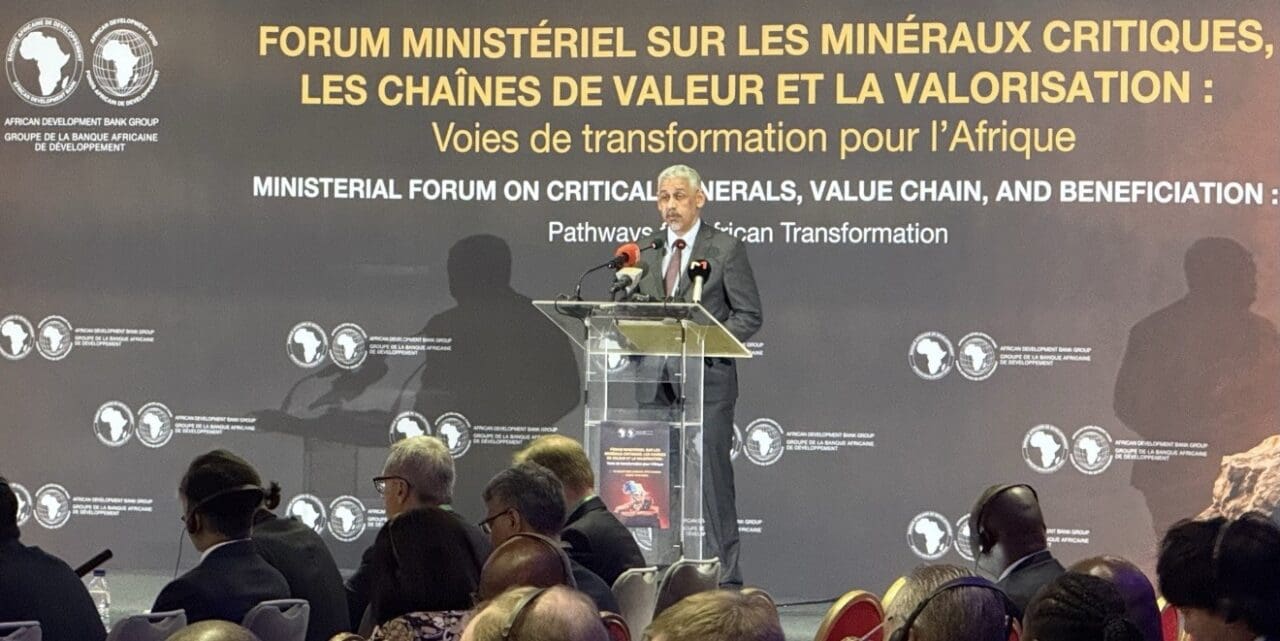
Ministers from African nations rich in critical minerals and their development partners convened in Abidjan to forge a bold new strategy: turning the continent’s vast mineral wealth into an engine for economic, industrial, and social transformation. The discussions centered on local value creation, sustainable financing, and the development of regional value chains to meet surging global demand.
On July 10, policymakers from mineral-rich African countries gathered alongside representatives from the African Union Commission, the African Continental Free Trade Area (AfCFTA) secretariat, the United Nations Economic Commission for Africa, regional development banks, financial institutions, and international investors. The goal was clear: redefine Africa’s role in the global minerals economy.
Abidjan summit signals shift in Africa’s mining future
The conference marked a pivotal moment for African nations seeking to reclaim control over their mineral resources. With 30% of the world’s critical mineral reserves—including cobalt, lithium, graphite, rare earths, platinum group metals, copper, manganese, and nickel—Africa holds a treasure trove worth an estimated $29.5 trillion, more than eight times the continent’s annual GDP. Yet, despite this immense potential, only about $8.6 trillion of these resources remain untapped.
The gathering underscored a shared resolve: Africa must move beyond exporting raw materials and instead build resilient infrastructure, local industries, and integrated regional value chains. The shift is not just economic—it’s a strategic imperative to ensure that the continent’s mineral wealth translates into tangible benefits for its people.
A call for systemic change in resource governance
Sidi Ould Tah, President of the African Development Bank (AfDB), opened the conference with a stark assessment: Africa’s current approach to managing its natural resources is unsustainable. He urged a fundamental overhaul of the continent’s development financing model, highlighting a critical gap: despite over 100 development finance institutions across Africa, their combined balance sheets represent just 1% of global development finance.
« This conference is about more than minerals—it’s about reshaping Africa’s future, » Ould Tah declared. « We must prioritize local processing to maximize value, strengthen our financial institutions, and invest in infrastructure that can support sustainable industrialization. » He emphasized that Africa’s mineral wealth could be a catalyst for job creation, technological advancement, and inclusive growth—but only if managed with long-term vision and collaboration.
Côte d’Ivoire charts a path to mineral-driven prosperity
Mamadou Sangafowa-Coulibaly, Ivory Coast’s Minister of Mines, Petroleum, and Energy, reinforced the call for continental solidarity. « No single country can harness its mineral potential in isolation, » he said. « We must work together to build regional value chains that create shared prosperity. »
The Minister highlighted Côte d’Ivoire’s vast untapped potential, noting that nearly 75% of the country’s territory may hold critical minerals. This resource base is central to President Alassane Ouattara’s vision of elevating Ivory Coast to upper-middle-income status by 2030. To achieve this, Abidjan is rolling out a 2026–2040 integrated mineral and energy strategy, backed by a 38 trillion CFA franc investment plan, with 88% of funding expected from the private sector.
Global demand surge creates unprecedented opportunity
The stakes could not be higher. By 2040, global demand for platinum group metals is projected to skyrocket by over 1,000%, lithium by 842%, and copper by 88%, driven by the clean energy transition. The electric vehicle and battery supply chain alone could expand from $7 trillion in 2030 to $59 trillion by 2050—a once-in-a-generation chance for Africa to position itself as a key player.
Yet, seizing this opportunity requires more than ambition. It demands a departure from the old model of exporting raw materials and embracing a new era of industrialization, innovation, and regional cooperation. The ministers in Abidjan made it clear: Africa’s mineral wealth must fuel sustainable development—not just for a few, but for all.